
Last updated November 15, 2026
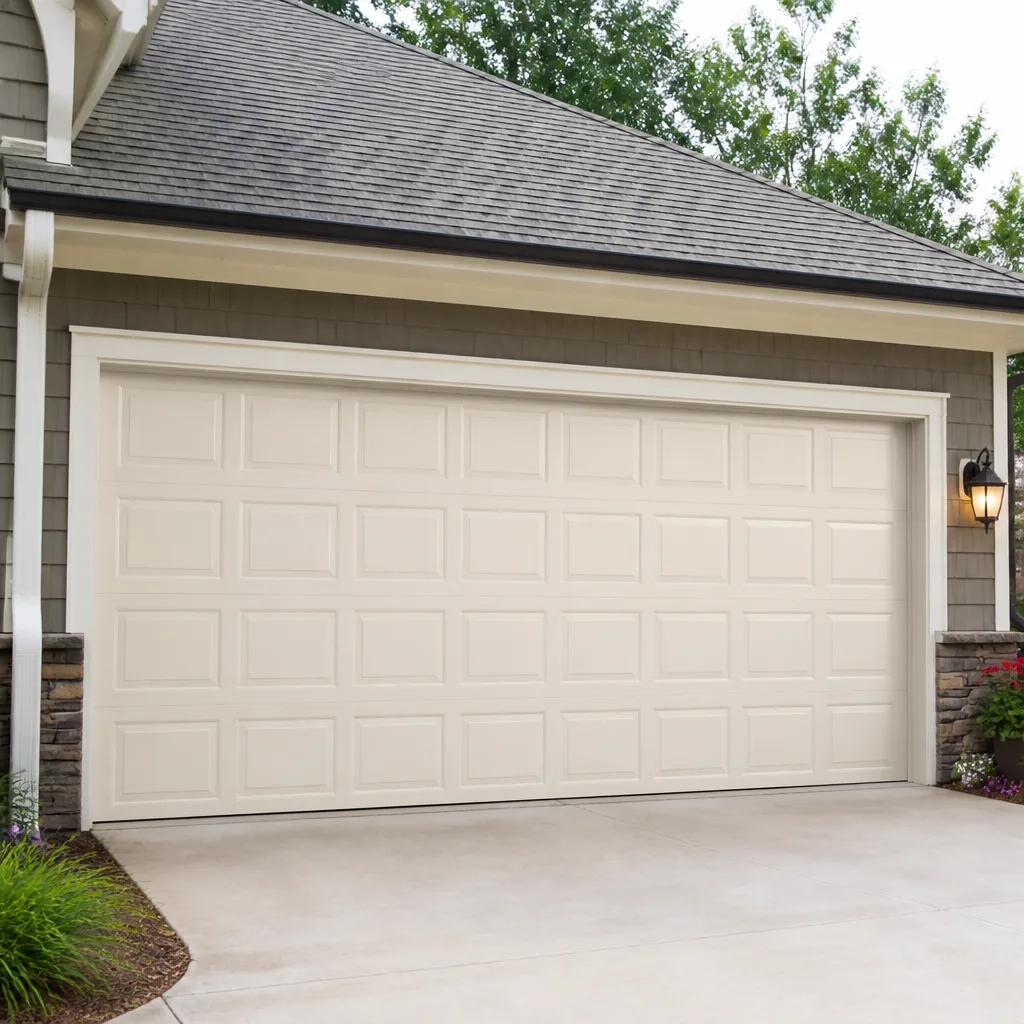 Raised-panel steel
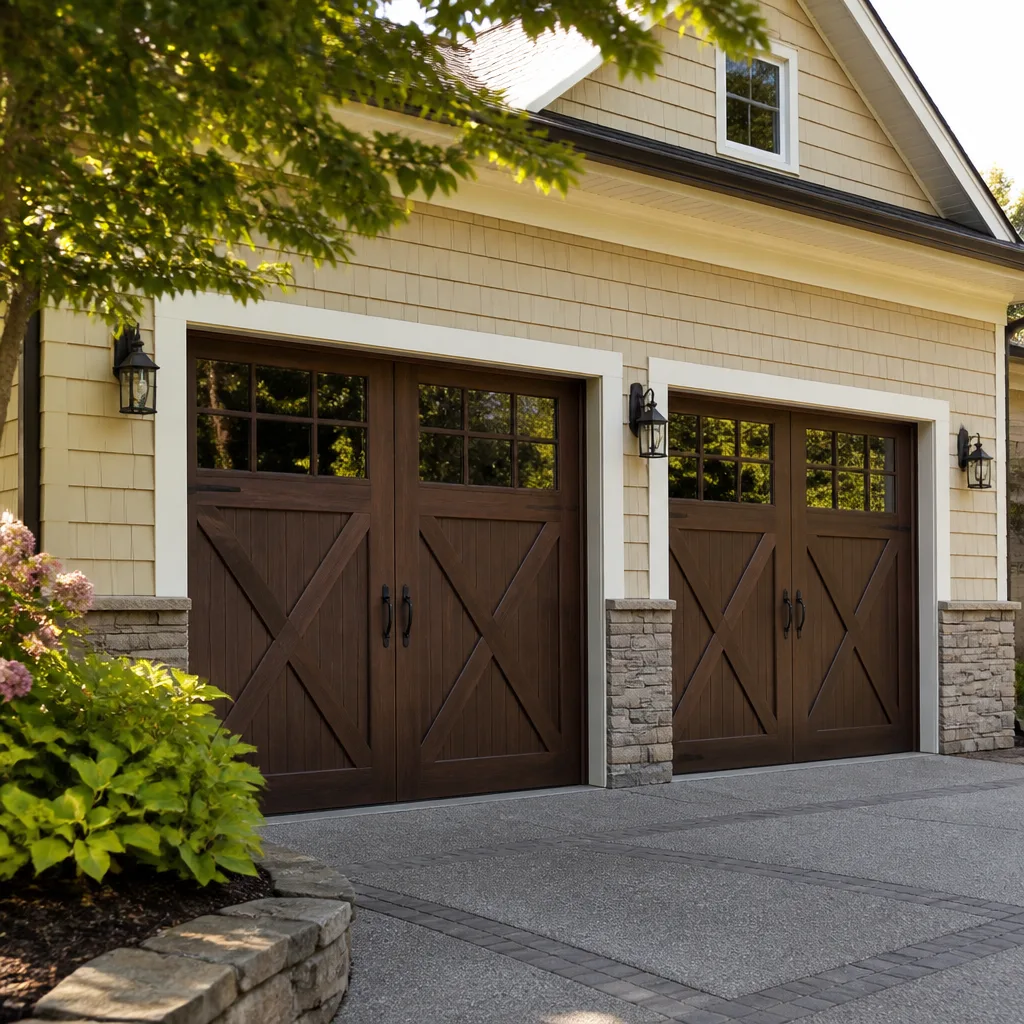 Carriage house
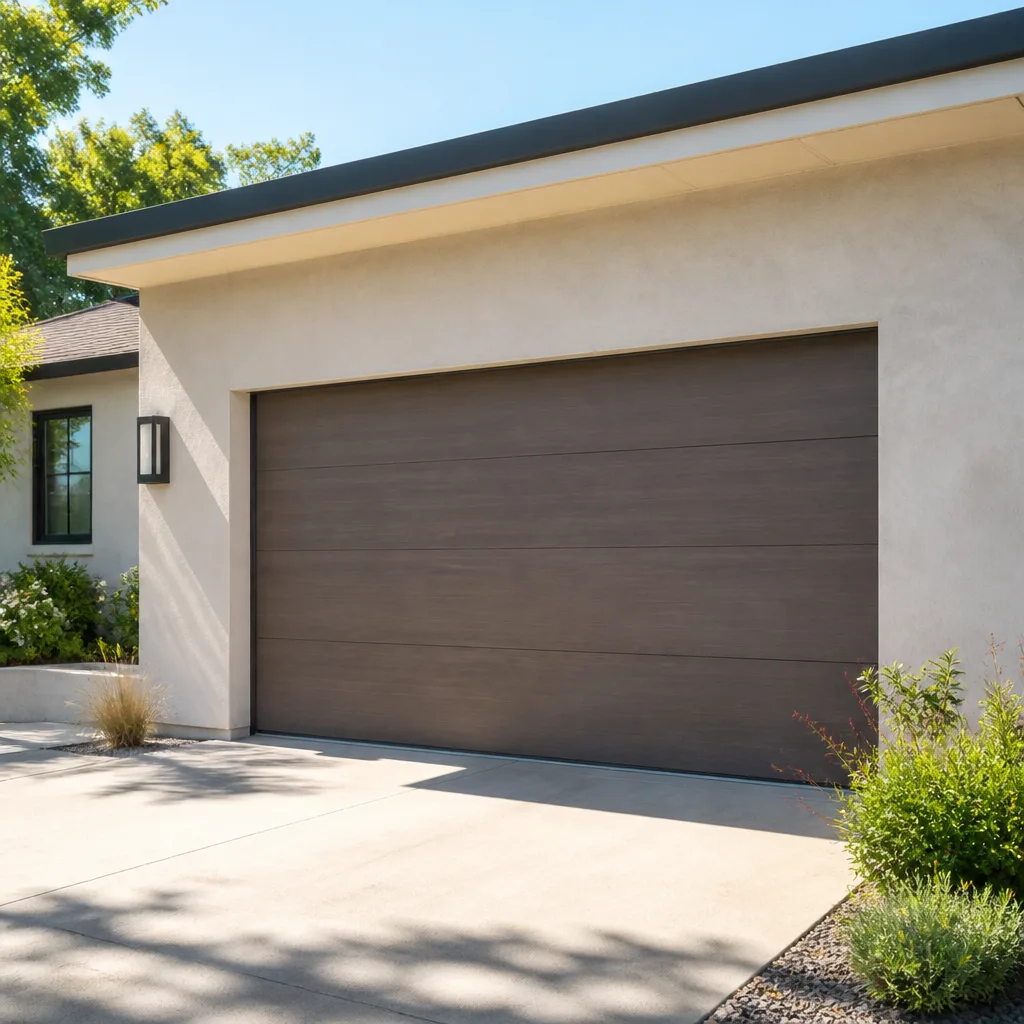 Modern flush
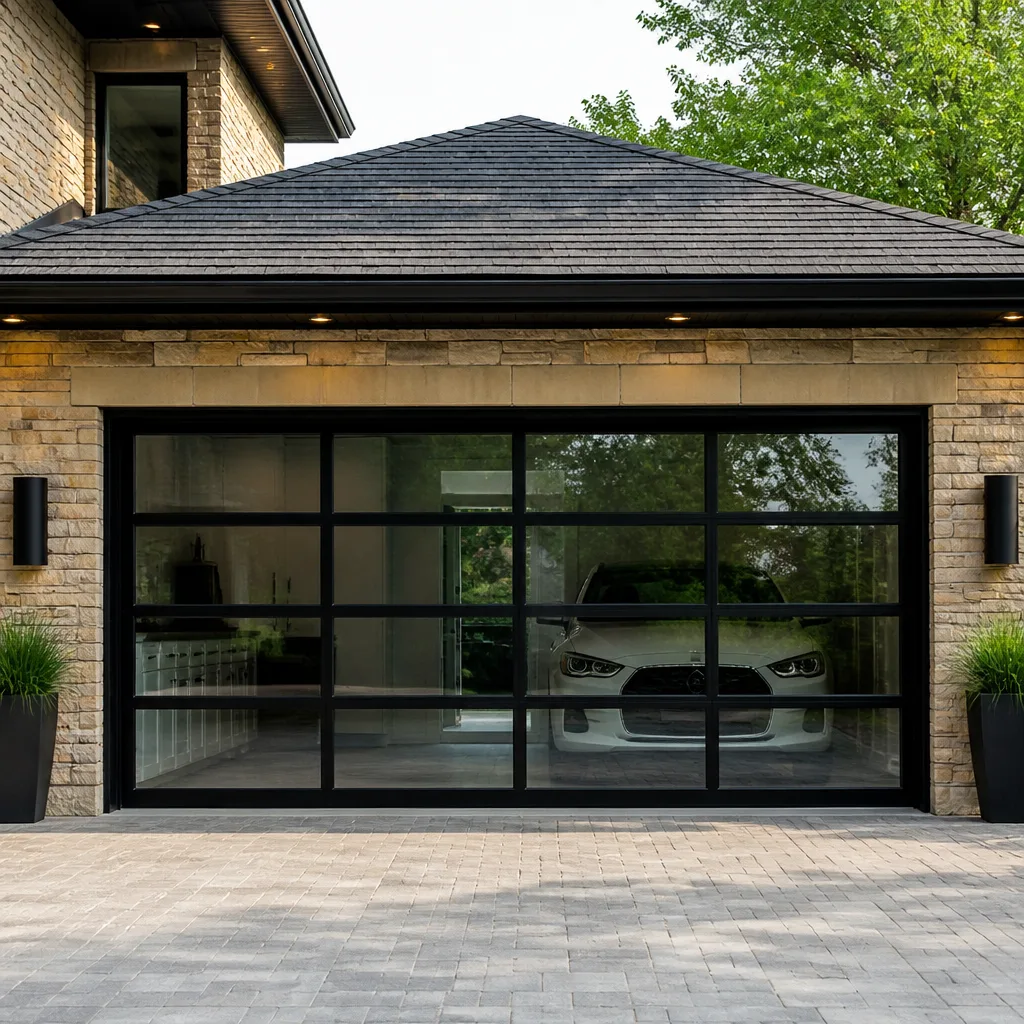 Full-view glass
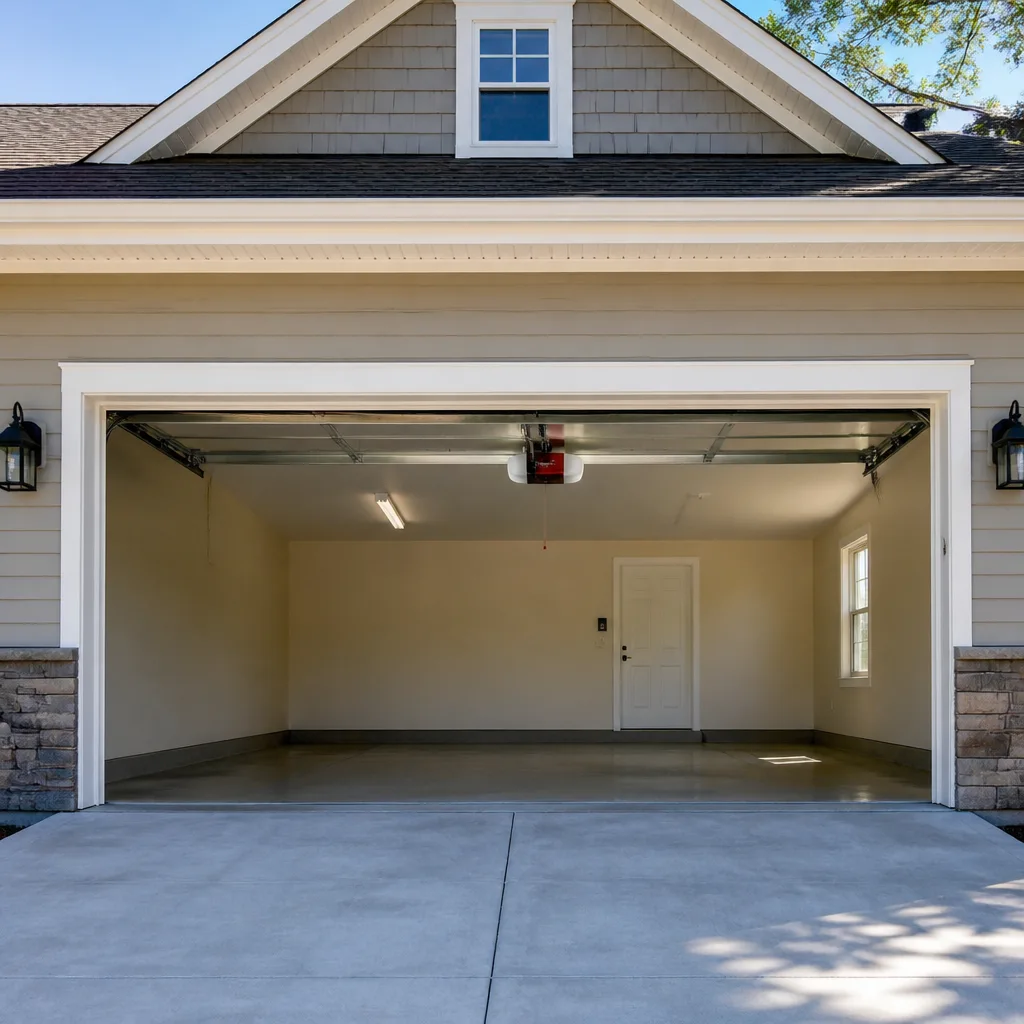 LiftMaster openers
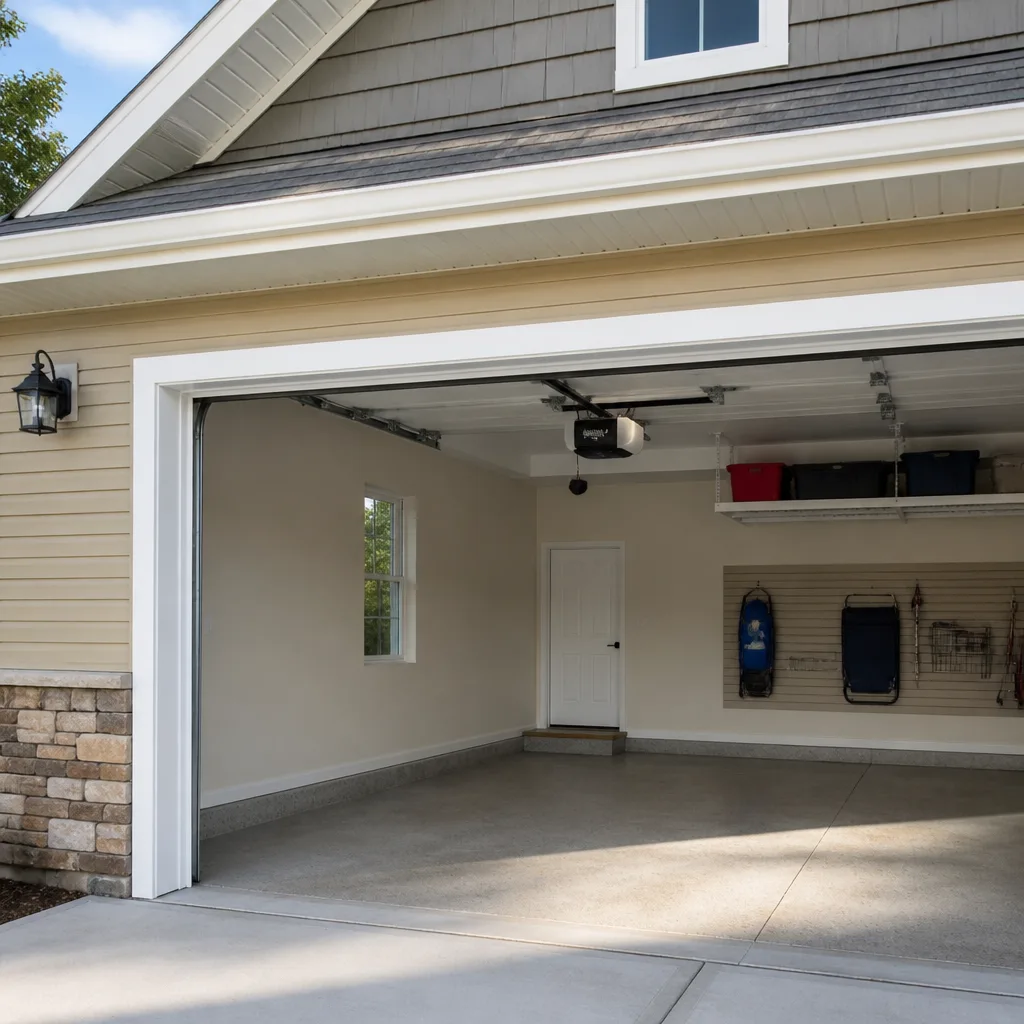 Chamberlain openers
Full 25-point door and opener safety check with every visit - springs, cables, rollers, tracks, and your LiftMaster or Chamberlain opener included
You get a price before we start. It does not change when the pro arrives.
Get your free estimateHow to Hire a Garage Door Contractor in Richmond: A Step-by-Step Guide
Most homeowners assume that any company with a garage door on its van can fix any garage door. That’s the mistake we hear about over and over in Richmond. A technician who’s spent their career with one manufacturer will open your opener and quietly discover it’s a brand they’ve only seen in a parts catalog. The job stalls, the diagnosis shifts, and the recommendation often becomes “you’d be better off replacing the whole thing.” The garage door service market in Richmond includes single-brand dealers, big-box referral networks, and independent multi-brand shops, and the difference between them decides whether your technician can actually fix what’s in your garage. This guide teaches you to read contractor credentials the way a contractor reads a door: what to check, what to ask, and what a good quote looks like before anyone touches a spring.
Quick Answer
To hire a garage door contractor in Richmond, verify three things before you book: a valid Virginia contractor license, current general liability coverage you confirm in writing, and confirmed experience with your specific door and opener brand. Get a written, itemized estimate that separates parts from labor, confirm the tech has handled your brand before, and never let anyone pressure you into a same-day decision on a spring or a full replacement. A specialist who works on doors and openers exclusively will diagnose the real failure the first time and explain the fix in plain terms.
Styles & brands we work with
- Raised-panel steel
- Carriage house
- Modern flush
- Full-view glass
- LiftMaster openers
- Chamberlain openers
Table of Contents
- Single-Brand Dealers vs. Independent Multi-Brand Technicians
- Virginia Licensing: What Garage Door Work Actually Requires
- How to Verify Insurance Is Current, Not Just Claimed
- Questions That Reveal Whether a Tech Knows Your Brand
- Red Flags in a Garage Door Quote
- Richmond Climate and House Age: Why Local Context Matters
- Springs, Cables, and Why This Is Not a DIY Job
- The Hiring Process, Step by Step
Single-Brand Dealers vs. Independent Multi-Brand Technicians
A manufacturer-authorized dealer is a business contracted to install and service one brand’s products. That’s not a knock. Their techs typically receive factory training on that line, and their parts access is deep in that ecosystem. If your door or opener was bought new through that dealer and the work stays under warranty, there’s real value in staying with them. The problem arrives when you call the wrong dealer for the wrong brand. In Richmond, it’s common for homeowners to inherit a garage door from a prior owner and have no idea what’s mounted to the wall until the door stops mid-travel.
An independent multi-brand technician works across several manufacturers instead of one. The practical difference shows up two ways:
- Diagnosis first, sales second. A multi-brand tech has no reason to steer you toward the one product line their company sells. They can look at a LiftMaster opener and a Wayne Dalton door on the same visit and tell you which part actually failed.
- Fewer dead ends. When a service company works one line, an unfamiliar brand brings the job to a halt. A multi-brand specialist confirms coverage up front.
Neither model is inherently better. The question is whether the company you’re calling matches what’s in your garage. If you don’t know your brand, look at the opener housing for a label before you call. Most techs will ask you anyway, and knowing the answer tells you in one sentence whether you’ve reached a company that handles the job or one that will find out mid-call.
Virginia Licensing: What Garage Door Work Actually Requires
Virginia separates licensed contractors from the general public by requiring certain work to be performed under a proper license, and garage door installation and repair falls into contracting territory, not general handyman work. The exact class of license depends on the project’s value, so ask the company what license they hold and check it against the Virginia Department of Professional and Occupational Regulation (DPOR) license lookup. Don’t take a verbal “we’re licensed” as confirmation. A working contractor has a license number that appears in the state database.
This matters more for garage doors than it might seem. Installing a new door means anchoring tracks, balancing torsion or extension systems, and setting the opener’s travel limits. Getting one of those wrong doesn’t just produce a bad fit; it stresses the spring system and the opener motor in ways that shorten the life of both. A handyman without garage-door-specific licensing may be willing to take the job, but the work falls outside the scope they’re actually credentialed to do.
How to confirm, step by step:
- Ask the company for their license number and classification before booking.
- Look the number up in the DPOR public database; the name and status should match the company you spoke with.
- Ask whether the techs on the job site are employees or subcontractors, and whether subcontractors carry their own license.
- If a company can’t produce a valid license quickly and without friction, that’s a sign to move on.
Every technician at Stallion Garage Door Service is state-licensed and works exclusively on garage doors and openers rather than splitting time across unrelated trades. Specialists who work one system develop the specific instincts generalists don’t.
How to Verify Insurance Is Current, Not Just Claimed
“Insured and bonded” gets printed on nearly every service van, but the phrase alone tells you nothing about whether the policy was renewed this year. Insurance is a live requirement. Verification is the only way to know the coverage is current at the moment the job happens, not at the moment the business set up its website.
Two coverage types matter for garage door work:
- General liability protects your property. If a door panel drops and breaks a window, or a tech’s tool damages a door track or a car on the other side of the wall, liability coverage is what pays.
- Workers’ compensation protects you from being on the hook if a tech is injured on your property. In a job with heavy moving parts, stored spring energy, and overhead load, injury risk is real.
Ask for a certificate of insurance (COI) before work begins and read the coverage dates, not just the limits. A certificate with an expired date is a warning sign. A company that hesitates to share one is a bigger one. For spring and cable work especially, insurance status is not paperwork – it’s your only protection if something fails after the invoice is signed.
Our technicians carry up to 13 years of experience, and the crews we connect you with work insured and bonded. Ask for the COI on every job, ours or anyone else’s.
Questions That Reveal Whether a Tech Knows Your Brand
You don’t need to know how a torsion spring works to figure out whether the tech on the phone does. Most of the tell is in the follow-up questions. A generalist will ask the same three questions about every call; a specialist adapts to what you tell them. Try these:
- “Have you worked on [your brand] before?” A technician who has handled a LiftMaster or a Raynor opener regularly will tell you specifics – which models use which rail type, which alignment issues recur. Vague answers like “we work on all brands” without specifics are a soft warning. Our teams work across LiftMaster, Chamberlain, Genie, Clopay, Amarr, Wayne Dalton, Craftsman, and Raynor, so unfamiliar make-and-model combinations don’t become problems on the job.
- “What’s the most common failure on this opener model?” A tech who knows the product will name the actual failure mode (worn gear, stripped trolley, photo-eye misalignment). A tech reading from a parts catalog won’t be able to.
- “If the spring is broken and the opener still works, what do you check?” A specialist flags the imbalance and the cable condition before replacing anything else. A generalist often jumps straight to the opener.
- “Will you need any parts you don’t keep on your van?” An honest answer explains lead time. An answer that says nothing ever needs to be ordered is one that may suddenly need to order something.
The single best tell: a technician who asks about your door’s age, size, and current brand before quoting a single number. That’s someone diagnosing the job instead of selling a package.
Red Flags in a Garage Door Quote
A quote is a document, not a conversation. When it arrives, read it hard. Almost every complaint we hear in Richmond traces back to a quote that felt vague at the time and became a problem later. Here’s what to watch for:
- Lump-sum pricing with no line items. A legitimate estimate separates parts from labor and names what’s being replaced. “Spring replacement: $XXX” is not enough. You want the spring size, the number of springs, the labor, and any cable or bearing work included.
- Refusal to itemize. If a company won’t break the price down on paper, they’re not giving you an estimate, they’re getting a verbal agreement. Documents protect both sides.
- Same-day pressure. “This price only holds today” is a sales tactic on a repair, not standard practice. Garage door springs don’t suddenly cost less tomorrow; the quote should hold.
- Price changes once on site. The written estimate you receive should be the price you pay. Small adjustments are sometimes legitimate when the tech finds unforeseen damage, but a quote that doubles on the driveway is a red flag raised after the fact. Ask for the estimate in writing before any work starts, and confirm the number is honored.
- Upselling to a new door when a repair is the fix. A worn spring doesn’t need a new door. A new door is sometimes genuinely the better long-term choice, but the tech should explain the tradeoff clearly, not push.
- Spring pricing that treats one as a pair. Torsion doors usually use two springs, and a matched pair is replaced together, so expect the pair to cost roughly twice the cost of one spring. A quote that charges pair pricing for a single spring deserves a follow-up question.
None of these are hard proof on their own. Together they’re strong enough to make a second call before you sign anything.
Richmond Climate and House Age: Why Local Context Matters
Richmond sits in a spot where hot, humid summers meet cold winters, and that swing stresses the whole door assembly more than climate doomsayers suggest. Wooden and steel doors expand and shrink through the year, which loosens hinges, throws tracks slightly out of line, and loads springs unevenly. The humidity is the quieter culprit: wood doors take on moisture in summer and go brittle in winter, and steel panels can rust at the bottom where water collects. You’ll notice it first as a door that closes a half inch short of the ground in summer and grinds at the top in January.
Richmond’s housing stock compounds the issue. Older neighborhoods around the Fan, Church Hill, and Ginter Park have many homes with the original single-car door setup, now decades old and often on an extension-spring system. Newer construction in Short Pump and Midlothian usually has torsion systems on double doors with openers mounted directly to the ceiling joist. Those are two completely different service profiles, and a contractor who only sees one type of door on a regular basis is at a disadvantage on the other.
Richmond also deals with real storm seasons. Thunderstorms roll through reliably in spring and summer, and the occasional leftover hurricane system brings wind and toppled trees. Hail isn’t a big local concern, but wind-blown debris and impact damage on a door panel do turn up after storms. A tech should be able to tell impact damage from corrosion damage and recommend accordingly.
When you’re reading a quote, ask whether the estimate accounts for the specific door in front of you – not a standard Richmond door copy-pasted from a template. A specialist adjusts for the age of the assembly, the type of spring system, and the condition of the top section, which often carries the load and takes the most wear. If you need a repair today, see garage door repair for a more focused write-up on what’s involved.
Springs, Cables, and Why This Is Not a DIY Job
A garage door spring holds the door’s full weight plus the tension required to lift it. If it releases unexpectedly, the stored energy is enough to cause serious injury in a fraction of a second. Cables under tension are equally dangerous. This is the part of garage door work where we’re most direct: removing, winding, or adjusting a spring is not a homeowner task, even for someone handy with tools, and no guide, video, or forum post changes that. Do not attempt to unwind, cut, or adjust a spring or cable.
What you can do safely is notice the symptoms that mean a spring is failing:
- The door feels much heavier than it used to when you lift it by hand, and won’t stay open at waist height. That’s spring tension gone.
- A visible gap in the coil of a torsion spring, or a snapped extension spring hanging slack above the track. A broken spring is a stop-using-it situation.
- The opener motor runs but the door barely moves or doesn’t lift at all.
- The door slams down at the end of its cycle instead of easing to a stop.
- Cables that look frayed, kinked, or slack on one side.
If you see any of these, keep the door closed, unplug the opener, and call a technician. Same-day service is often available in Richmond for a broken spring – a trained tech can identify the spring size, confirm both springs need replacing, and give you a firm written price before starting. Fast dispatch from 7am to 7pm. We answer 24/7. Reach us at (844) 834-1312.
If the failure is on the opener side instead – motor, trolley, safety sensors, or remote pairing – that’s a separate service, and you can read more about garage door opener repair for a focused breakdown of what typically goes wrong and what it takes to fix it.
The Hiring Process, Step by Step
The entire process should take 30 to 60 minutes of your time, most of it research and one call. Here’s the sequence that works:
- Identify your door and opener. Look at the opener housing for a brand label, and check whether the door has torsion springs (a horizontal shaft above the door with two coiled springs) or extension springs (running along the sides). Knowing this before you call saves a round trip.
- Confirm the company works on your brand and system. Ask directly. A specialist will answer without hesitation. A single-brand dealer that doesn’t carry your line should be honest about it; if they aren’t, that’s a warning.
- Verify licensing and insurance. Look up the license number in the DPOR database, and request a current certificate of insurance by email. Both should be easy for a legitimate contractor to produce.
- Describe the problem clearly and ask what the estimate covers. Is it a diagnostic visit followed by a separate repair price? Are parts included? Is the estimate written?
- Get the quote in writing before anyone begins. The written estimate should itemize parts and labor, and it should be the number you pay. Confirm that no work starts until you’ve agreed to the price.
- Ask what happens if the tech finds more damage. A legitimate answer is that you’ll be told and asked to approve any addition before it happens. A bad answer is “we’ll figure it out on the spot.”
- If the answer is “replace the door,” ask why a repair isn’t viable. A door can be genuinely past repair, but the reasoning should be specific. If the tech can’t explain what would fail if you repaired instead, get a second estimate.
- Book it and confirm arrival window. Fast dispatch runs 7am to 7pm, Sunday through Friday; we’re closed Saturday. A call outside dispatch hours is booked into the next opening, Sunday through Friday, 7am to 7pm.
That last point matters. Companies that book Sunday through Friday and hold the line on Saturday are using the day off for their crews, not to raise weekend prices. The price is set per job by the written estimate, and neither emergency timing nor day of week changes it. For a broader view of how we work across brand and system, start with Richmond and work outward.
Common Mistakes to Avoid
- Calling a single-brand dealer without knowing your brand. Mid-job surprises in Richmond almost always trace back to this. Check the opener label first, then call a company that confirms coverage on that exact make and model.
- Accepting “we’re licensed and insured” without proof. Ask for the license number and the current certificate of insurance, then verify both. If a company is slow to produce either, that’s your answer.
- Agreeing to a lump-sum quote with no line items. You can’t compare two quotes if neither tells you what’s included. Itemized estimates reveal parts, labor, spring count, and any add-ons.
- Letting same-day pressure decide the job. Spring pricing doesn’t evaporate overnight. A legitimate estimate holds long enough for you to read it.
- Treating a broken spring as an opener problem. Homeowners sometimes replace the opener when the real failure is the spring. If the opener motor hums but the door doesn’t lift, the spring is the first thing to rule out.
- Assuming a new door is the only fix for a worn one. A specialist can usually repair the mechanism for far less. Replacement is a real option only when panels, hardware, and opener all need replacing together, and that’s a conversation, not a sales pitch.
- Skipping the warranty question on parts and labor. Springs, openers, and cables come with manufacturer warranties; labor coverage varies by company. Ask what’s covered and for how long before you sign.
See the difference
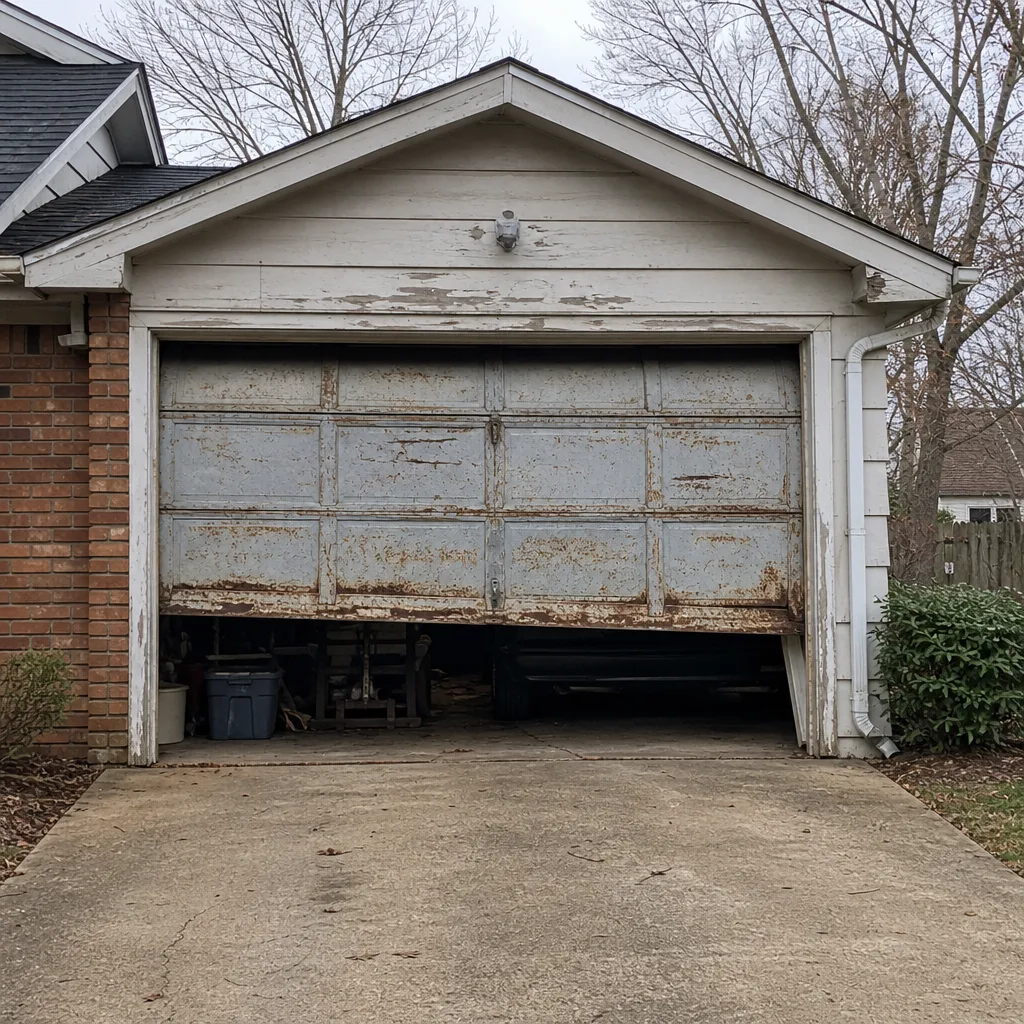 Before
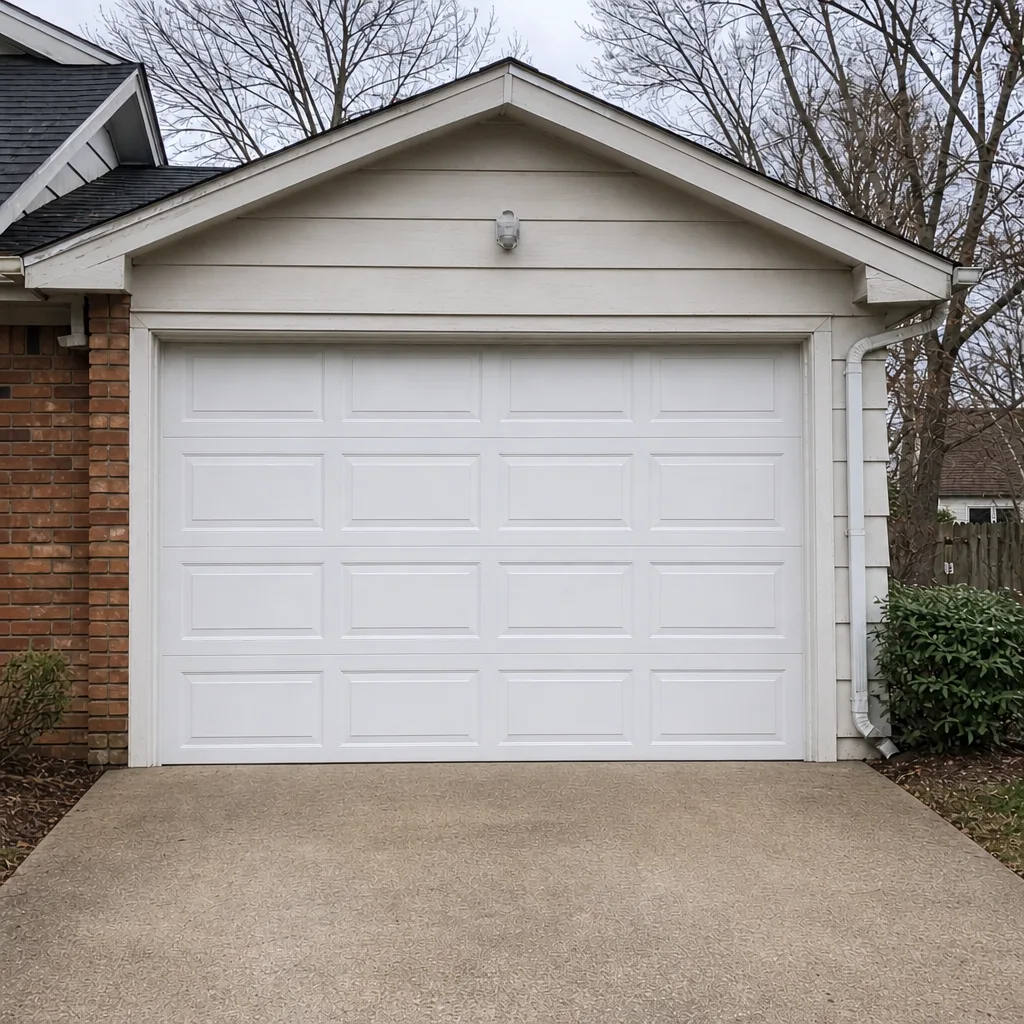 After
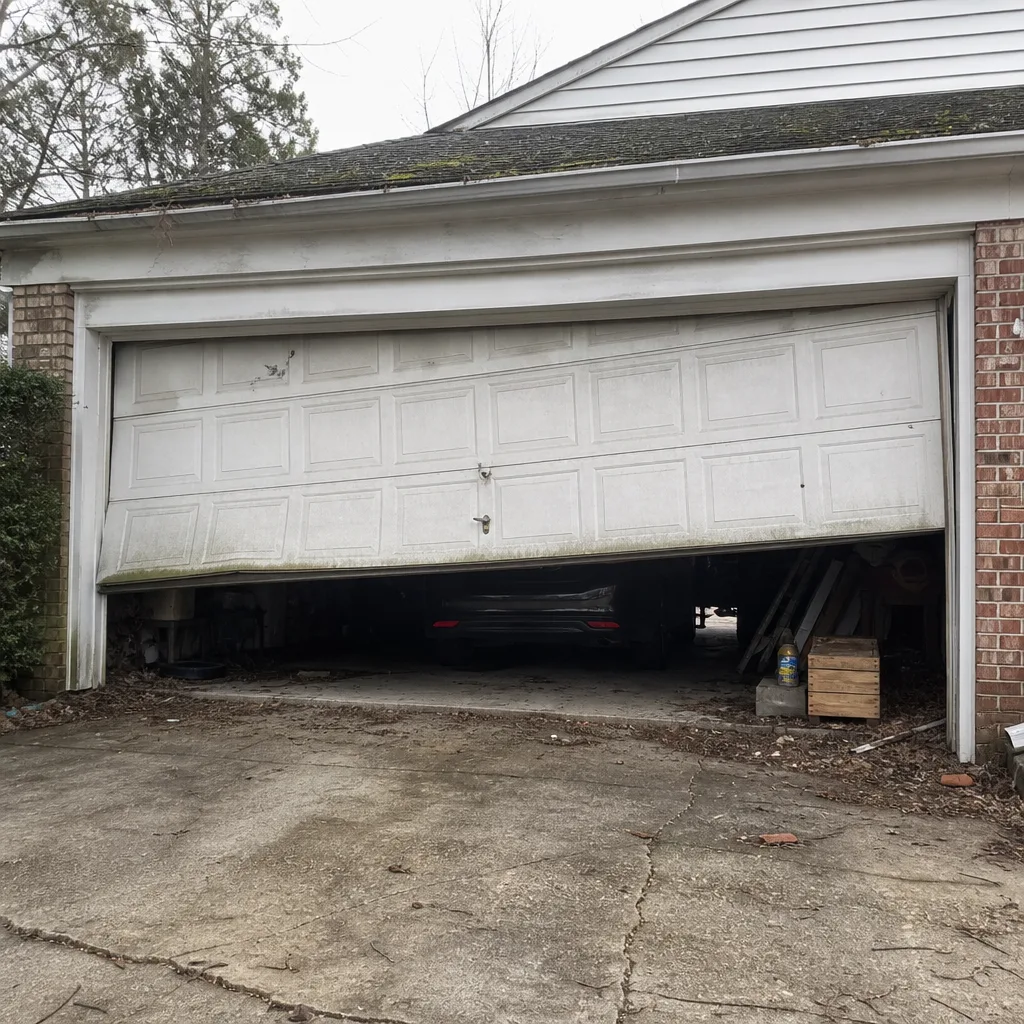 Before
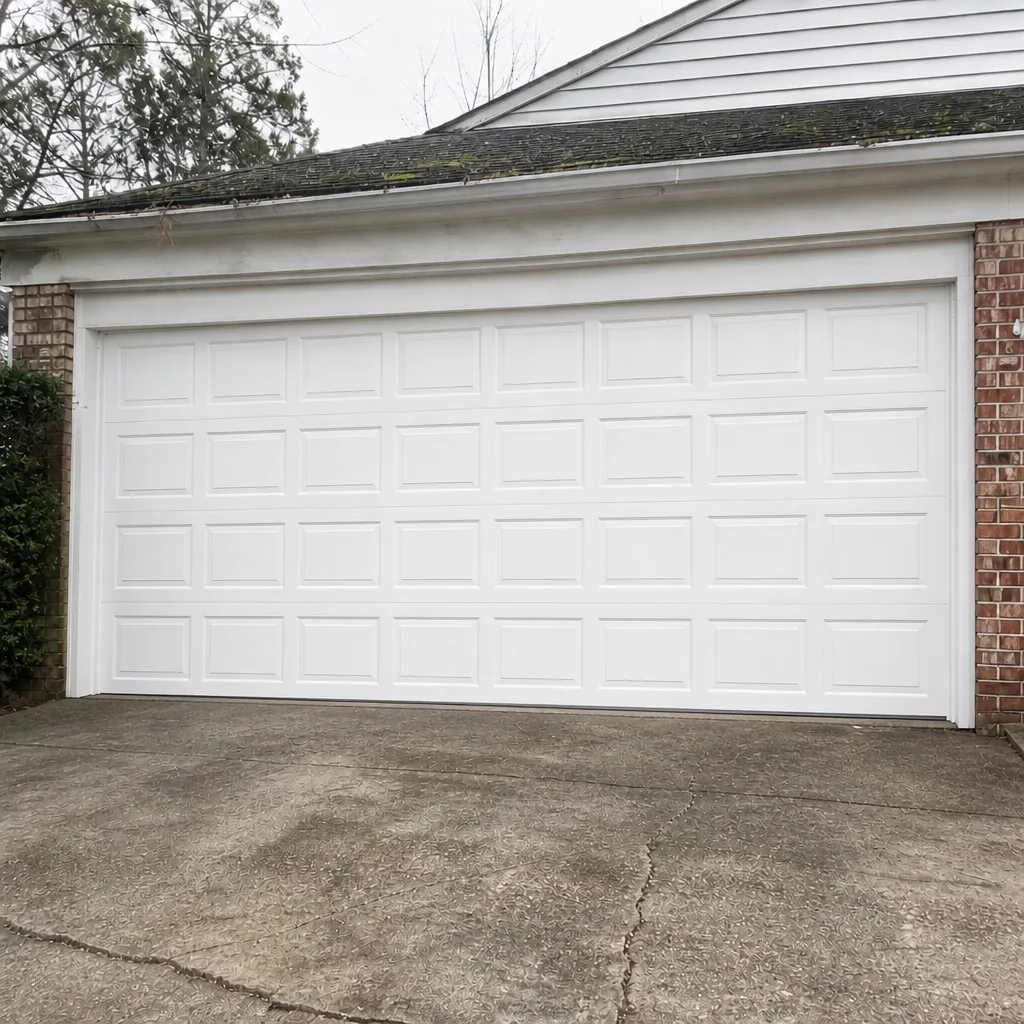 After
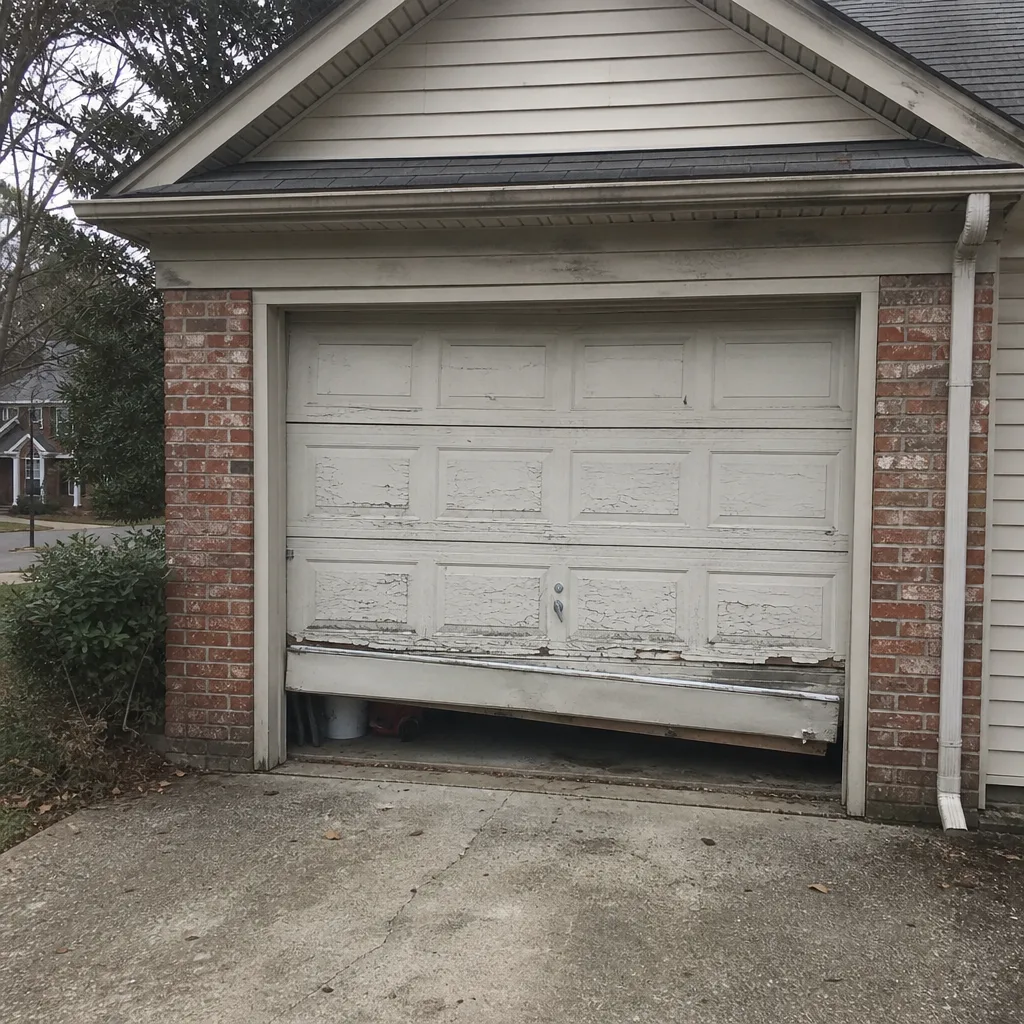 Before
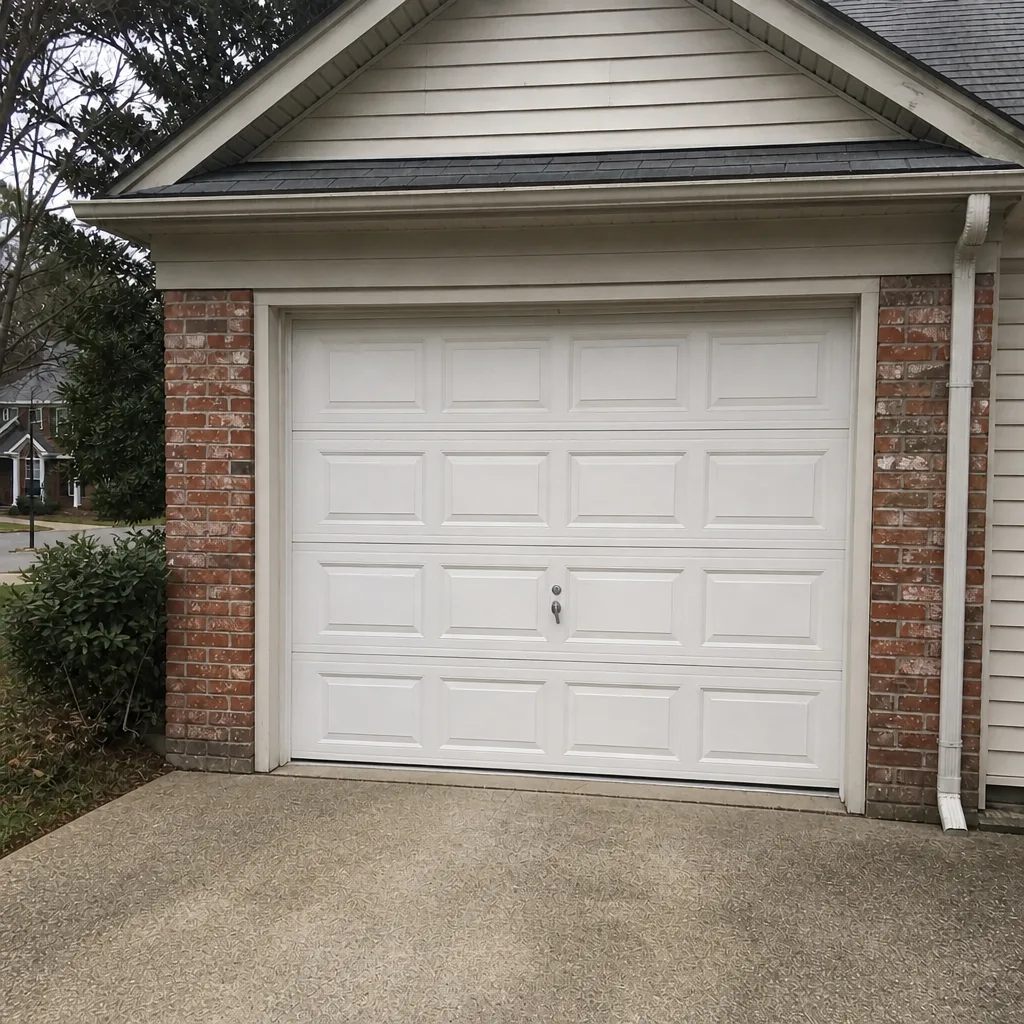 After
When to Call a Professional
Some garage door issues genuinely need a tech on site. A snapped spring, a cable hanging loose, a door that’s come off one track, or an opener whose motor hums but won’t move the door are all cases where calling is the right move. So is any door that closes crooked or hangs unevenly; misalignment means the spring system or track is under stress, and that only gets worse. A remote that won’t pair is worth one try; if it won’t work after that, it’s a technician question. If wind has knocked a panel loose or a tree limb has dented a section, that’s a repair call, not a panel swap. Stallion Garage Door Service offers free estimates in Richmond and can dispatch a specialist to diagnose the problem. Call (844) 834-1312. We answer 24/7. Fast dispatch from 7am to 7pm, Sunday through Friday.
Frequently Asked Questions
Ask for their Virginia contractor license number and look it up in the DPOR public database, where you can confirm the classification and status. The name and status should match the company you spoke with, and a legitimate contractor should be able to give you that number without delay. If they can’t, move on to the next company.
Spring repair in Richmond is typically priced per spring, and torsion doors usually use a matched pair that’s replaced together, so expect the pair to cost roughly twice the cost of one spring. The written estimate you receive is the final price, quoted and agreed before any work starts. Call (844) 834-1312 for an exact quote – estimates are free.
Usually not. A single-brand dealer’s parts channel is built around one manufacturer’s ecosystem, and an unfamiliar brand may leave them without a straightforward path to the fix. A multi-brand specialist won’t hit that wall. Before booking, confirm the company handles your specific brand and that they have a track record with it.
No. We quote the price in writing and agree it before work starts, and the estimate is what you pay. If the tech finds something additional that genuinely changes the scope, you’ll be told and asked to approve it before any extra work begins. You should never be surprised by a bill that doesn’t match the quote.
Yes. Every technician we connect you with is state-licensed and works insured and bonded. For spring and cable work in particular, ask for the certificate of insurance before work begins and read the coverage dates, not just the limits. Any legitimate contractor in Richmond can produce that without friction.
If the opener motor runs – you hear it hum or click – but the door doesn’t move, the failure is more likely a broken spring or cable than the opener itself, and the door should stay closed and unplugged until a technician confirms. If the opener does nothing at all, that’s more likely an electrical or opener-side failure. Either way, a specialist diagnoses in minutes. Call (844) 834-1312.
The Bottom Line
Hiring a garage door contractor in Richmond comes down to three checks: license, insurance, and confirmed experience with your specific brand and door system. Verify all three before anyone arrives, and get the estimate in writing before work starts. The quote you agree to is the price you pay, and no honest company will push you off that. A specialist who works on doors and openers exclusively will find the real problem faster and fix it with the right part, rather than selling you a replacement because the first tech didn’t recognize your Wayne Dalton or your Craftsman. That’s the difference between a fast fix and an expensive rerun.
If you’re ready to get a written estimate for repair, replacement, or a new opener install, call Stallion Garage Door Service at (844) 834-1312 for a free estimate. We answer 24/7. Fast dispatch from 7am to 7pm, Sunday through Friday.
Written by the team at Stallion Garage Door Service.