
Last updated November 15, 2026
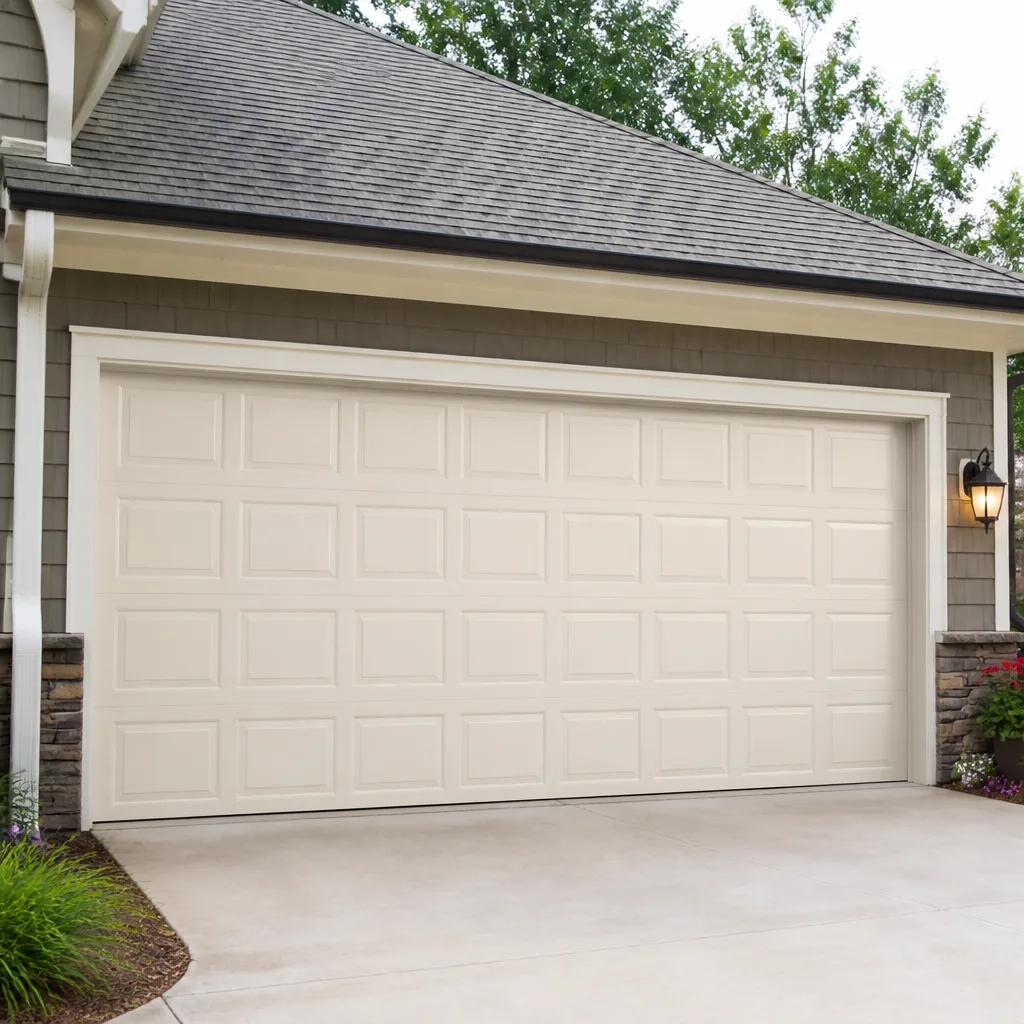 Raised-panel steel
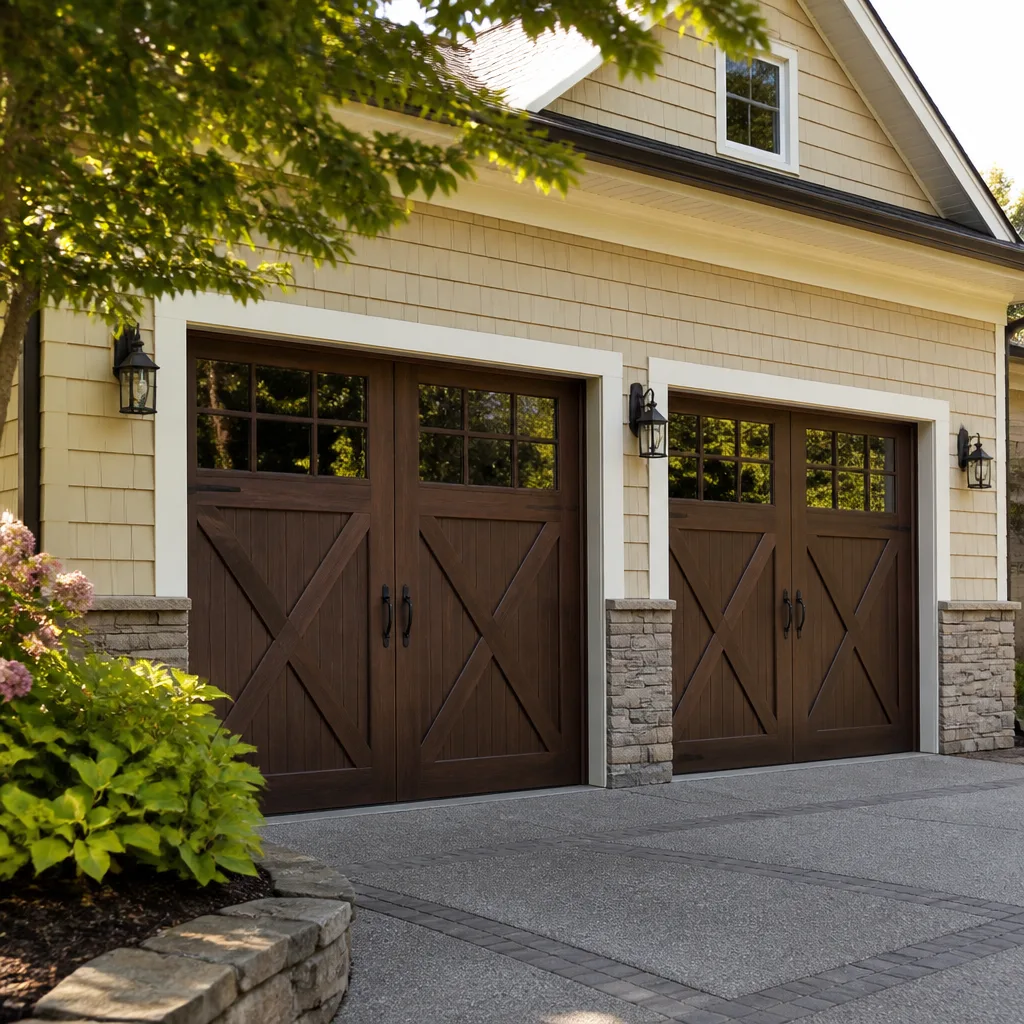 Carriage house
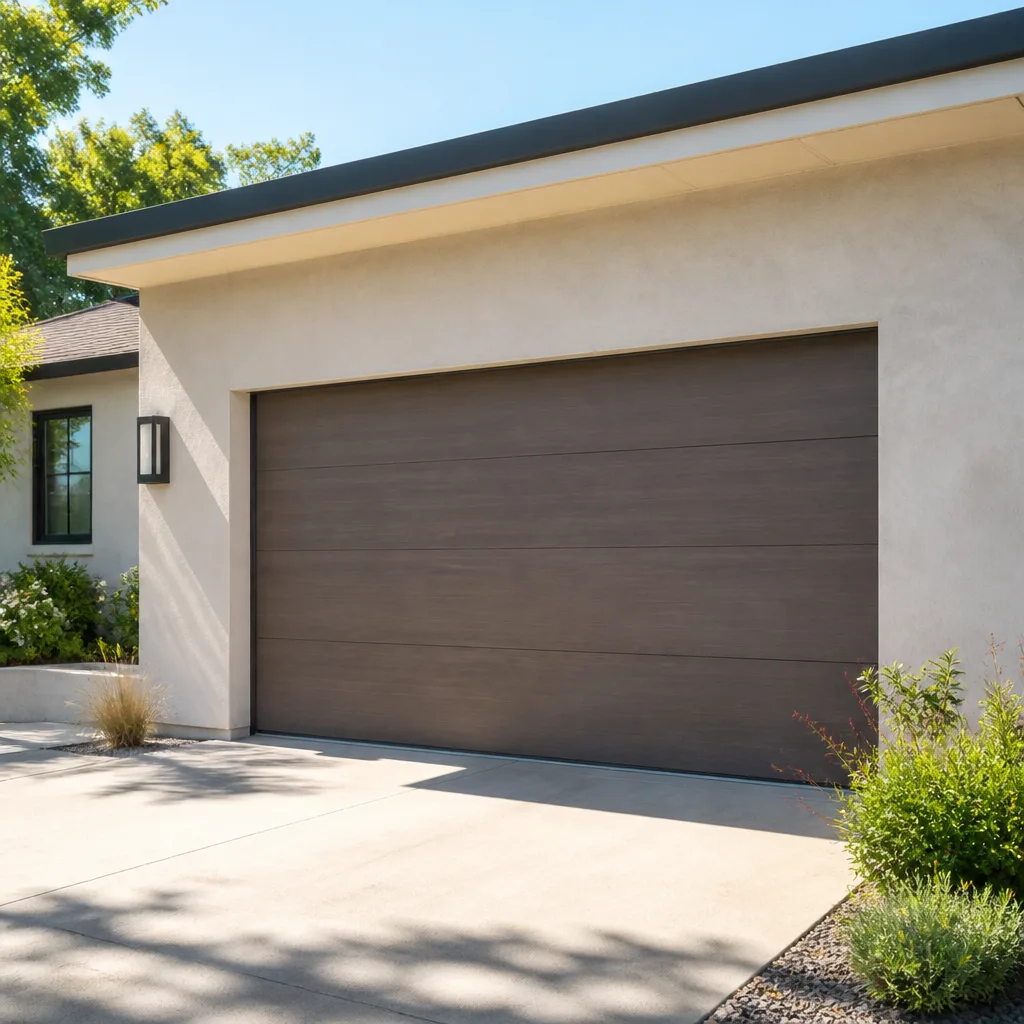 Modern flush
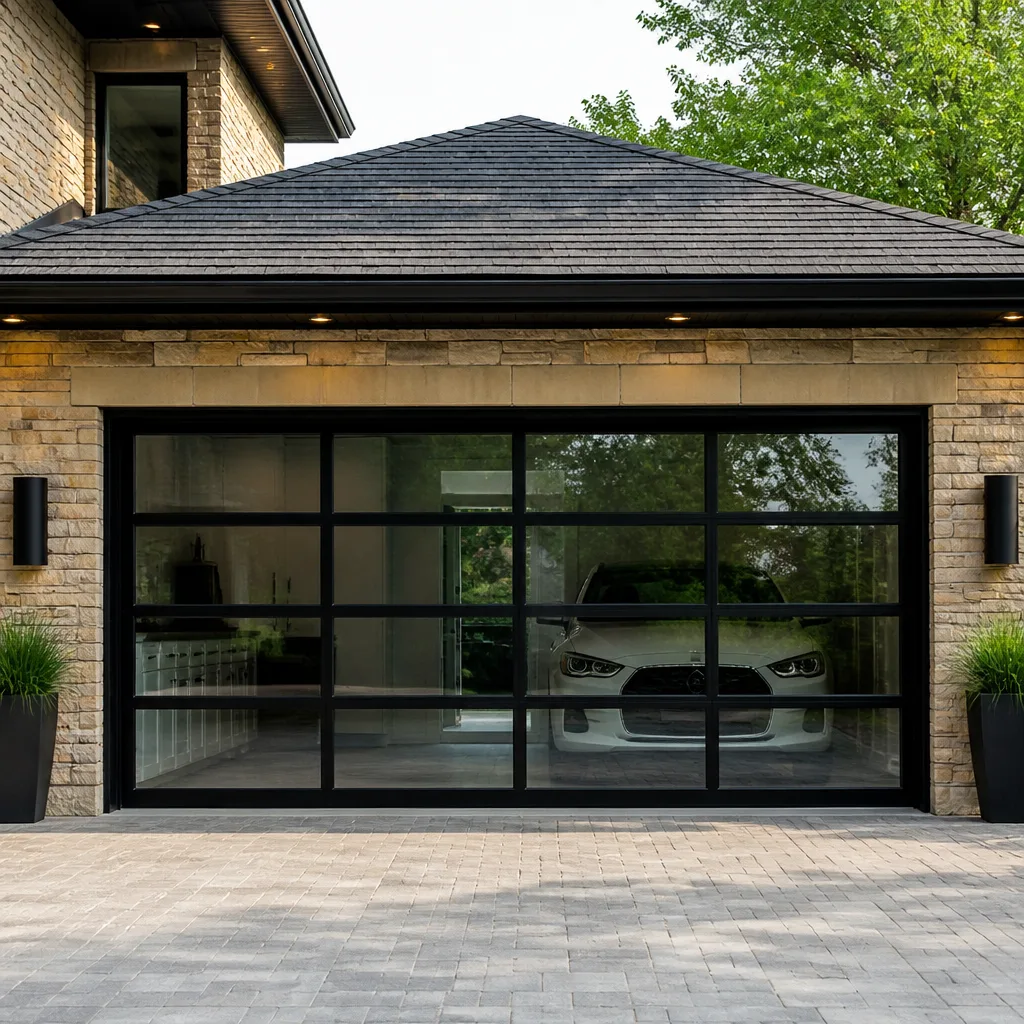 Full-view glass
 LiftMaster openers
 Chamberlain openers
Full 25-point door and opener safety check with every visit - springs, cables, rollers, tracks, and your LiftMaster or Chamberlain opener included
You get a price before we start. It does not change when the pro arrives.
Get your free estimateGarage Door Emergency Preparedness Guide for Richmond Homes
Most homeowners treat the garage door as a convenience. It opens, it closes, and nobody thinks about it until it doesn’t. But in Richmond, the garage door is emergency infrastructure. Tropical storm remnants, ice storms, and multi-day power outages turn a garage into the only vehicle exit a house has left – and an electric opener with no battery backup turns that exit into a wall. The disconnect cord may be hanging behind a shelf you haven’t moved in years. This guide covers what to test before a storm, how the manual release actually works, which openers keep running when the grid doesn’t, and how to inspect a Richmond door system after high wind. We want you prepared, not surprised.
Quick Answer
A garage door emergency in Richmond usually comes down to one of three failures: an opener with no power and no battery backup, a manual disconnect cord that’s jammed or broken from years of neglect, or a door that’s stuck mid-travel after a storm. The fix starts before the emergency – test the release cord annually, confirm whether your opener has battery backup, and know what to check after high wind. If the door is already stuck, don’t force it. Call a specialist and keep your hands off the spring system. Call (844) 834-1312. We answer 24/7. Fast dispatch from 7am to 7pm, Sunday through Friday.
Styles & brands we work with
- Raised-panel steel
- Carriage house
- Modern flush
- Full-view glass
- LiftMaster openers
- Chamberlain openers
Table of Contents
- The Manual Disconnect Cord: The Most Ignored Part of Your Door
- Battery Backup Openers: What Actually Runs During a Richmond Outage
- Wind Load Ratings and Richmond’s Tropical Storm Threat
- What to Do When the Door Is Stuck Mid-Travel
- Post-Storm Inspection Checklist
- Ice Events, Extended Outages, and Aging Hardware
- Building a One-Page Emergency Plan for Your Household
The Manual Disconnect Cord: The Most Ignored Part of Your Door
Every residential garage door opener has a manual release – a cord or handle hanging from the trolley that disconnects the door from the opener motor so a person can lift it by hand. It is the single most important backup device on the entire system, and it is almost never tested. We’ve seen cords zip-tied to a rail, wrapped around a bicycle hook, buried behind shelving, or frozen solid with age. In a power outage, the disconnect is the difference between driving out and being stranded. This is a garage door emergency in Richmond that most homeowners never see coming.
How the manual disconnect works: pulling the cord releases a latch in the trolley, separating the door carriage from the opener belt or chain. The door is then free to move by hand along the tracks. To re-engage it, you pull the door carriage back toward the opener, and the trolley re-latches automatically the next time the opener runs.
What can go wrong with the disconnect
- The cord is caught on something. A cord hooked behind a ladder or tied off to a rail will not release. The homeowner pulls harder, the mechanism binds, and the door stays locked to the motor.
- The trolley latch is stuck. Dirt, dried grease, or lack of use freezes the latch. A disconnect that hasn’t moved in years is more likely to fail than one that’s been exercised.
- The cord is missing or broken. Pull-cords fray. A broken cord means the only way to release the trolley is from a ladder, reaching into the mechanism – and that puts your hands near moving parts you shouldn’t touch.
- The door is too heavy to lift by hand. A single-car steel door should lift with moderate resistance. A door that takes both arms and a lean, or one that won’t stay up once raised, has a spring or balance problem. That is a repair, not an emergency workaround.
The annual test we recommend
- With the door fully closed, stand clear of the path.
- Pull the release cord firmly. You should hear and feel the trolley release.
- Lift the door by hand about halfway. If it lifts smoothly and holds its position when released, the springs and balance are healthy.
- Lower the door gently, then run the opener once so the trolley re-engages. Confirm the door cycles normally.
If any step fails, that’s a door in need of service – not a door that’s ready for storm season. This is the level of testing that garage door repair visits routinely cover. If you’ve never tested yours, this is the month to do it.
Battery Backup Openers: What Actually Runs During a Richmond Outage
Battery backup openers keep the garage door working when the power goes out. The opener runs on a sealed rechargeable battery for a limited number of cycles – typically enough for a day or two of normal household use, and it charges itself back up when the power returns. Not every opener has this feature. Many openers installed in Richmond homes over the last twenty years are AC-only units with no battery bay at all. If your opener has no backup, a prolonged outage means every trip in and out of the garage is by hand.
Which brands offer battery backup
Among the eight brands we service, battery backup is a standard feature on LiftMaster and Chamberlain units in their better-equipped lines, and it is available on Genie models. Craftsman openers, which are common in older Richmond homes, vary by age and model – some have a battery backup option, many do not. You cannot add a battery backup to an opener that wasn’t built to accept one. If your unit is AC-only, upgrading the opener is the way to get backup.
What “real-world runtime” means during a Richmond outage
Outages in Richmond vary hugely. A brief transformer trip is minutes. An ice storm or a tropical storm line can knock out a neighborhood for a day or two. Battery backup gives you a buffered window – normally a handful of open-and-close cycles, enough to get vehicles in and out, not unlimited use. If a storm is forecast, don’t waste the battery testing the door repeatedly. Check it once before the storm and leave it alone.
Installation requirements
- The opener must support battery backup. It’s a factory feature, not an add-on kit.
- The battery needs to be healthy. Backup batteries are rechargeable but not immortal. If yours is several years old, its runtime may be far below what you expect.
- It needs a working battery warning light or beep. Most battery-backup openers signal a failing battery. Ignoring that signal quietly removes your backup without you noticing.
When a battery-backed opener fails or stops signaling, that’s a job for garage door opener repair, not a do-it-yourself battery swap, because the bay, wiring, and opener board are all involved.
Wind Load Ratings and Richmond’s Tropical Storm Threat
Garage doors are rated for wind load, measured by how much positive and negative air pressure the panels can resist before they deform, flex out of the tracks, or fail. Most garage doors are not hurricane-rated; they’re rated for ordinary residential wind pressures, and older panels installed decades ago in Richmond homes were built to standards that predate modern wind-load expectations. Tropical storm remnants push gust fronts and pressure fluctuations against the door that a light residential panel may not have been designed for.
What the rating means in practice
- Standard panels are rated for typical suburban wind, not storm-event pressures.
- Reinforced panels and wind-load-rated doors – available from Clopay, Amarr, and Wayne Dalton – use thicker gauges, heavier struts, and bracing designed for higher wind loads.
- Older single-wall panels deflect under pressure. When a panel deflects far enough, it can pop out of the track.
- Width matters. A double-wide door spans more and flexes more than a single-car door at the same pressure. Bigger openings need more reinforcement.
What Richmond homeowners can actually do
You don’t need to replace a sound door to improve wind resistance. Reinforcing struts and heavier hinges help. If the door is old, wobbly, or showing stress at the seams, it’s worth a professional assessment before storm season. If you’re choosing a new door for a Richmond home, this is where you should ask about wind-load options – especially on wide openings facing an exposed side of the house. In our experience, most homeowners buy on curb appeal and price and never ask, then discover the difference during a storm. When you’re shopping for a replacement, ask about wind-load rating, panel gauge, and strut reinforcement – and confirm the model you’re quoted actually meets the rating you need. A replacement door with a wind-load rating won’t rescue a bad storm, but it will far outperform a deflecting panel that pops the cable.
What to Do When the Door Is Stuck Mid-Travel
A door stuck halfway up during a power failure is one of the more dangerous garage door scenarios. It is hanging from springs and cables under tension. The carriage may be latched to the opener, or it may have slipped off the trolley. Most importantly, the door is unsupported – if the spring loses tension or a cable snaps, the door falls fast and hard. Never walk, reach, or work under a door that’s stuck partway up.
Safe procedure
- Keep everyone out of the path. Stop the door where it is. Don’t push it, don’t hold it, don’t get under it.
- Look at the opener light and trolley. If the opener has no power at all and the door is stuck unlatched, the release cord may have already been pulled or slipped.
- If the door is fully unlatched and lifting by hand is safe – meaning it feels evenly balanced and does not want to fall – lift it fully open, prop it, and evacuate the vehicle.
- If the door is latched to the opener and the opener has no power, carefully pull the manual disconnect, then test the door by hand.
- If lifting the door feels heavy, uneven, or the door wants to come down, leave it exactly where it is and call a specialist.
The two moves that cause real damage
The first: lifting a latched door by brute force. You can bend the trolley, break the carriage, or strip a gear inside the opener. The second: forcing a door that’s off track back into the track by hand. You risk bending a panel, kinking a cable, or getting a hand trapped. If the door is off the track, that’s a repair call – not a workaround. That’s a case for professional garage door repair, and it’s the one place where “let me just try” is the wrong instinct.
Power failure in Richmond and the call response
We answer 24/7. If your power is out and the door is stuck, call. Fast dispatch from 7am to 7pm, Sunday through Friday. A call outside dispatch hours is booked into the next opening.
Post-Storm Inspection Checklist
After a high-wind or ice event, the garage door can look perfectly fine and still be one cycle away from failure. A panel that flexed under pressure can be weakened at the seam. A cable can be kinked. A track can be bowed out a half-inch – enough to throw the door off alignment. Before you run the opener for the first time after a storm, walk the exterior and interior of the door with a deliberate checklist.
What to check on the door system
- Look at the panel surface. Any dents, paint cracks at seams, or visible distortion? A dented panel is weakened and may need replacement, not just dent repair.
- Check the track. Stand at one side of the door and sight down the vertical track. It should look straight. A bowed track is a symptom of forced movement or panel deflection.
- Check the cables. They should be taut and resting cleanly on the drums. Fraying, kinking, or cables hanging slack are a hard stop. Never touch a slack cable – that’s a spring or drum failure and it’s dangerous.
- Check the hinges. Wobbly or loose hinges mean the panel is no longer tight. Replacing a hinge is routine; replacing a bent hinge on a warped panel is not.
- Check the weather seal. Ice and wind rip bottom seals. A leaking seal lets water in and drives rust at the base.
- Check the opener light and safety sensors. The opener should still power up. Look at the safety sensor lenses on both sides of the door – if they’re blocked, dirty, or knocked offline, the opener will refuse to close.
- Cycle the door once, by hand first, if you have any doubt about how it’s moving. Then run the opener.
If anything looks wrong, don’t cycle the opener to “see if it works.” Call a specialist before you use the door. The cost of inspection is nothing compared to a repair from a door that failed mid-cycle.
Ice Events, Extended Outages, and Aging Hardware
Richmond gets ice. Not every winter, but often enough that an ice event is the single most damaging thing that happens to a garage door in the area. Ice bonds the bottom seal to the slab, loads the tracks, and can freeze a manual release cord into a block of ice. If a winter storm is forecast, plan for the door to stay shut until the ice melts.
Then there’s the power side. Extended outages can last a day or more after an ice storm or a tropical storm line. That’s when every failure point on the door system gets tested at once.
What ice does to a door
- The seal freezes to the floor. Running the opener tries to lift against bonded rubber. That can snap a bottom bracket bracket or overstress a spring.
- The track loads with ice. The door lifts unevenly, binding at one corner.
- The disconnect cord freezes. If you don’t test it in mild weather, you’ll discover it locked solid when you need it most.
- Ice accumulates on the roof and above the door, dropping onto the top seal when the storm ends.
What extended outages do to a door
Without a battery backup, every trip means lifting the door by hand. Homeowners who aren’t used to that will find the door heavy and may force it. Repeated hand-lifting of a poor-balanced door stresses the springs and can loosen the trolley. This is where an older door with tired springs gets pushed past its limit. If an outage is forecast and your opener has no backup, plan how you’ll exit – and don’t lift the door any more than necessary. Every lift is wear on the springs.
If the door is already unbalanced, weak, or noisy, this is the point to call a specialist rather than ride out an outage by force. That’s what we mean by a full-system assessment: the door, the opener, and the hardware are one system, and a specialist should be the one to assess all three together.
Building a One-Page Emergency Plan for Your Household
You don’t need a binder. You need one page, tested once a year. Every Richmond household with an attached garage should have a simple, written plan covering the door. Here’s what belongs on it.
- Test the manual disconnect. One test per year, scheduled for the same month – ideally early in the storm season. If it fails, fix it before storm season, not during a storm.
- Confirm whether the opener has battery backup. Look for a battery bay and a backup indicator light. If it’s a Craftsman or older Genie built before backup became common, it likely doesn’t. Write “no backup” next to the opener model.
- Write down the opener brand and model. If your opener fails in an outage, you can tell a specialist exactly what you have. We work on all eight major brands, so a call doesn’t stall on “we’ll have to check if we can service that.”
- Note the door size and type. Single or double, steel or wood, insulated or uninsulated. It’s on the model plate and easy to lose.
- Walk the door once a season. The Richmond storm season runs through summer and early fall, and winter ice arrives after. Spring and fall are the two natural checkpoints.
- Keep the path to the disconnect clear. Nothing hangs on a rail, sits in front of the trolley, or rests against the release cord. “The cord was behind a shelf” is the most common reason a homeowner can’t open their own garage after an outage.
- Program the emergency contacts. Save our number on the garage wall (or in the family phone) so a stuck door doesn’t send someone hunting for it in an outage. Stallion Garage Door Service covers repair, installation, and opener work in one call.
What a tested system looks like
If the door lifts evenly by hand, the release cord pulls clean, the opener powers up, the safety sensors are clear, and the seal is intact, your door is ready for storm season. If any of those items fails, it doesn’t matter that the door “usually works fine.” A door system is only as ready as its weakest link – and in Richmond, the weakest link is almost never the motor. It’s the release you’ve never pulled, the battery you’ve never checked, or the panel you’ve never looked at under pressure.
Common Mistakes to Avoid
- Not testing the manual disconnect for years. A cord that hasn’t moved in years is likely seized, caught, or frayed. Test it annually, before storm season, and fix it if it fails.
- Assuming every opener has battery backup. It’s a feature, not a default. Many Richmond homes have AC-only openers. Check before the storm, not after the power goes out.
- Forcing a stuck door back into the track. This bends panels, kinks cables, and can trap hands. If it’s off track, it’s a specialist call.
- Running the opener on an iced-up seal. The seal bonds to the slab, the opener pulls hard, and something breaks. If ice is forecast, keep the door closed until it clears.
- Ignoring a battery-backup warning beep. A dead backup battery removes your only defense against an outage. Replace it when the opener warns you.
- Forgetting the post-storm inspection. A panel that flexed can look fine and fail one cycle later. Walk the door after every high-wind event before running the opener.
- Skipping the pre-storm inventory. If you don’t know your opener brand or door size, a call during an emergency becomes a scavenger hunt. Note the details now.
See the difference
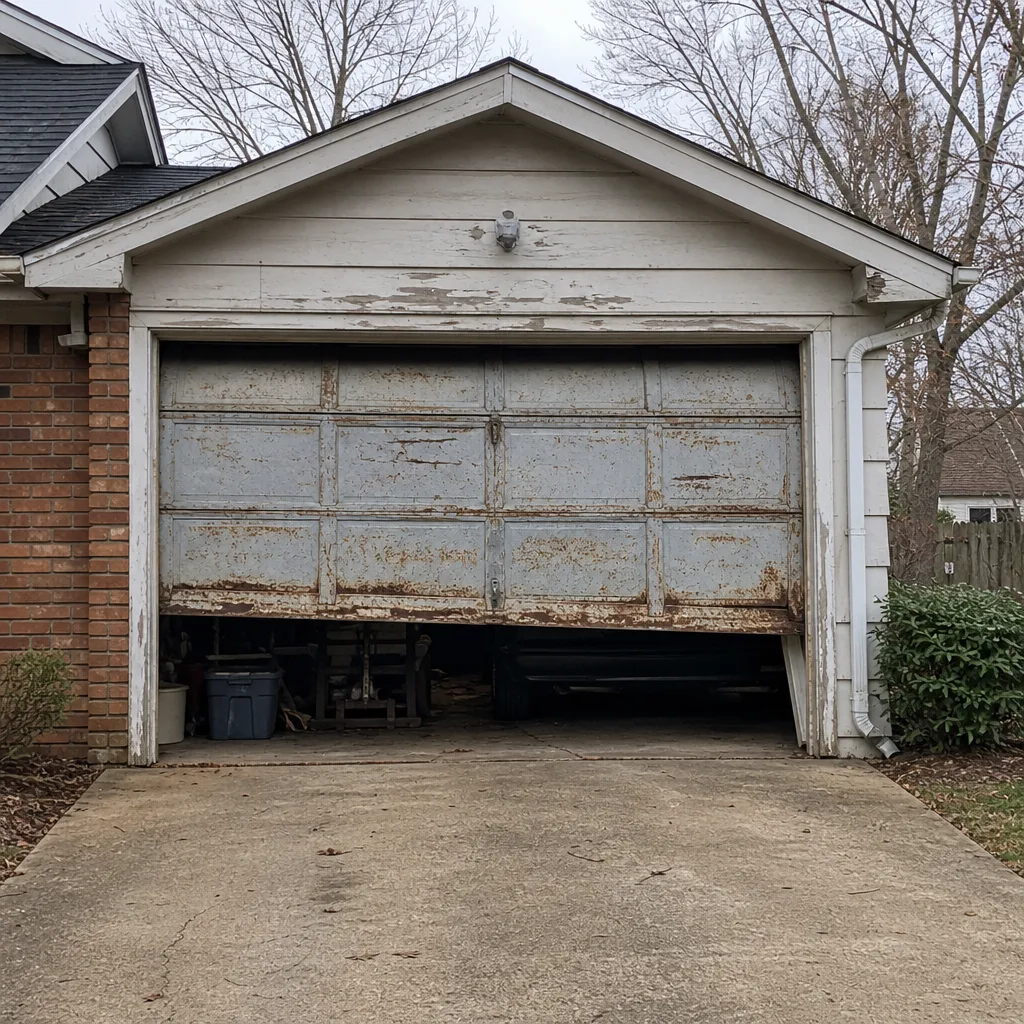 Before
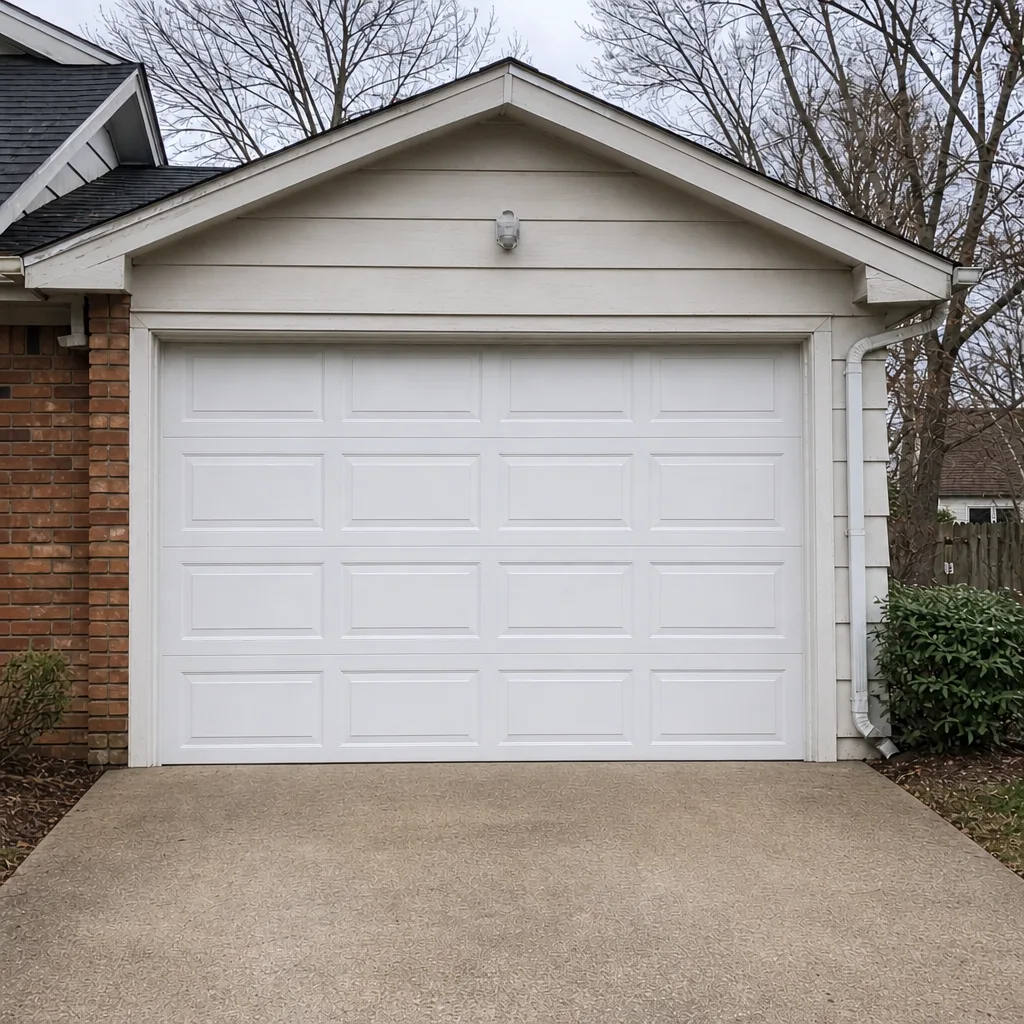 After
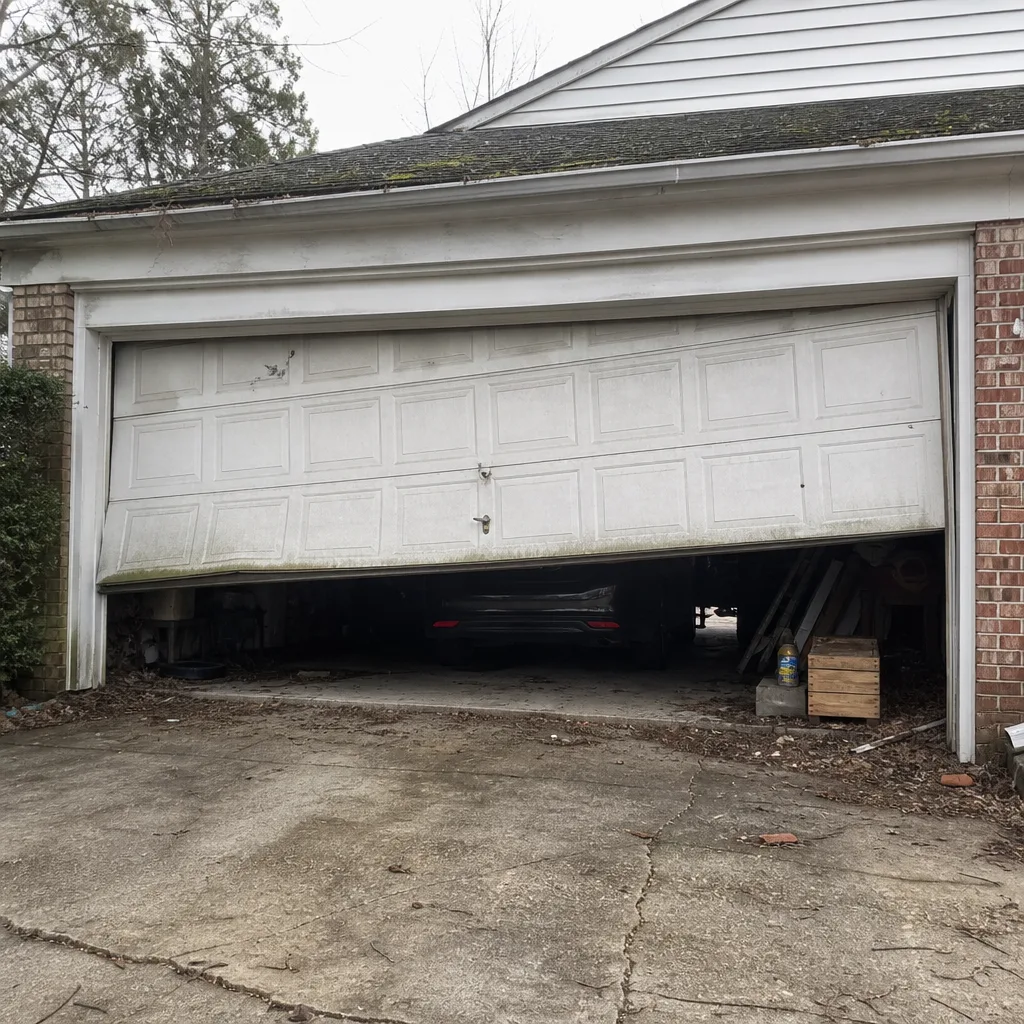 Before
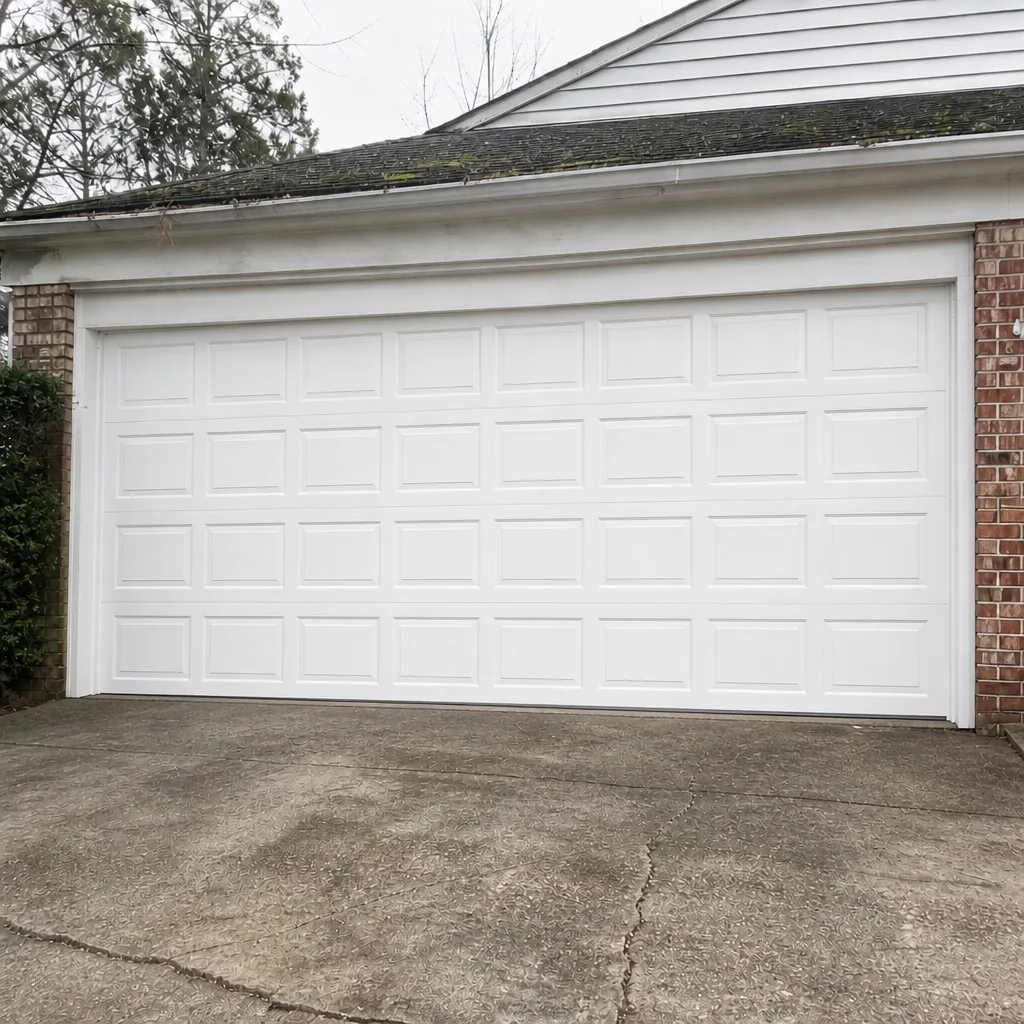 After
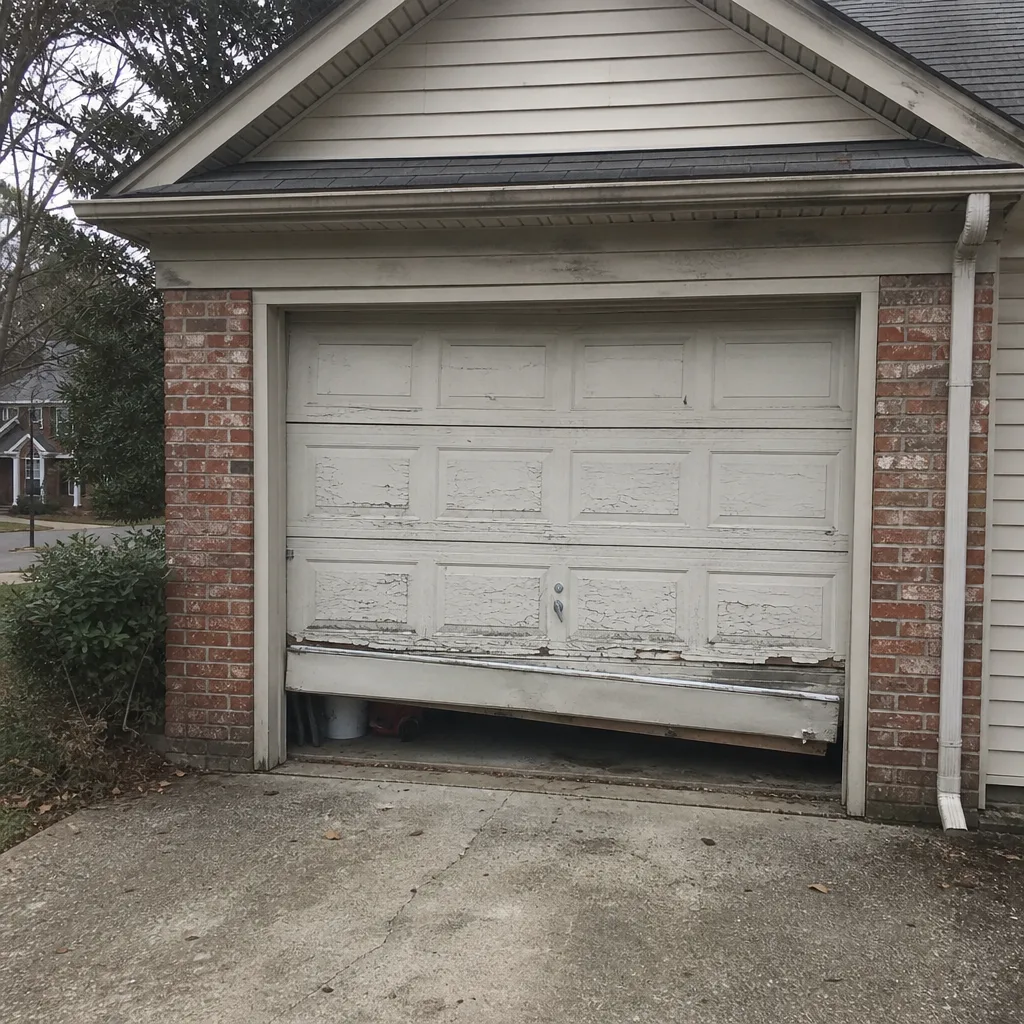 Before
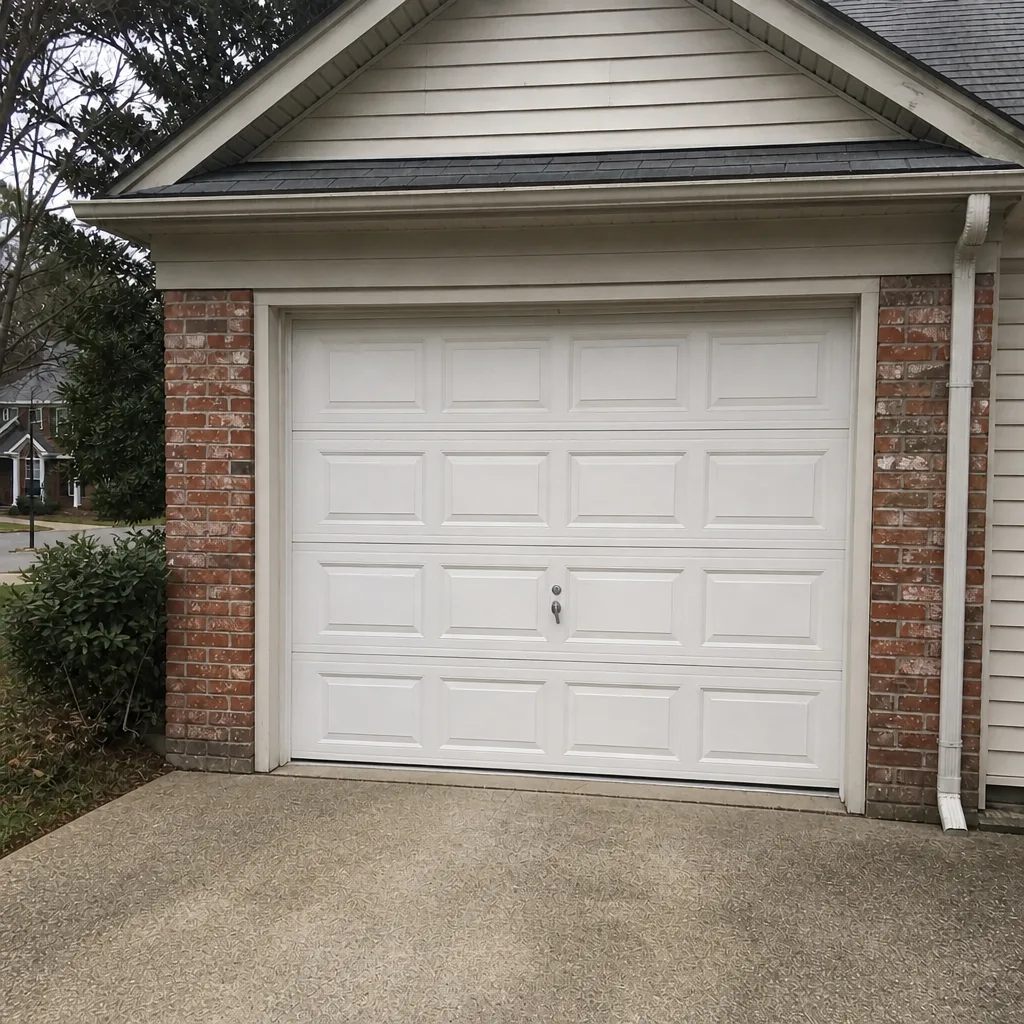 After
When to Call a Professional
Call us when the manual disconnect won’t release, when the door is stuck off track, when a cable is slack or kinked, when a panel is visibly dented or bowing, or when the door lifts heavy and won’t hold by hand. These are all safety issues that a homeowner should not solve with a ladder and a pair of pliers. Spring and cable systems are under extreme tension and are genuinely dangerous to touch. We also want the call if your opener has no battery backup and you rely on the garage as a vehicle exit, or if you don’t know the age of the backup battery. In our experience, a single checkup before storm season prevents most emergency calls. We work on Clopay, Amarr, Wayne Dalton, Craftsman, and every major opener brand, so tell us what you have and we’ll handle it. Stallion Garage Door Service offers free estimates in Richmond – call (844) 834-1312. We answer 24/7. Fast dispatch from 7am to 7pm, Sunday through Friday.
Frequently Asked Questions
Pull the manual release cord hanging from the opener trolley to disconnect the door from the motor, then lift the door by hand. If the cord is caught, broken, or frozen, call a specialist – don’t force the door. If the door is stuck partway up and feels heavy or wants to fall, stop and call. Call (844) 834-1312 for a quote on a repair or a battery-backup opener. Estimates are free.
Only if it was built with that feature. LiftMaster and Chamberlain units in the better-equipped lines have it, Genie offers it on select models, and Craftsman varies by age – many older Craftsman units do not. Look for a battery bay and a backup indicator on the opener. If your unit is AC-only, you can’t add backup to it; a replacement opener is the path. Call (844) 834-1312 for a free estimate on a battery-backup opener.
Keep everyone out of the door’s path and do not force it. If the opener has no power and the door is unlatched, lift it fully open by hand only if it feels evenly balanced, then evacuate. If it’s latched and the opener is dead, pull the manual disconnect and test by hand. If it feels heavy or wants to fall, stop and call. Call (844) 834-1312. Estimates are free.
The door’s wind-load rating tells you what pressure it was built to resist, and most standard residential doors are rated for ordinary wind – not storm events. Older single-wall panels are the most vulnerable. Check the door plate for a wind-load rating and ask about reinforcement if the door is wide or old. Call (844) 834-1312 for a free assessment before storm season.
Yes – a visual walk-around is safe and smart. Check the panels for dents and seam cracks, sight down the tracks for bowing, look at the cables for kinks or slack, and test the safety sensors. Never touch a slack cable and never force a door back onto a track. If anything looks wrong, call before running the opener. Call (844) 834-1312 for a free estimate on any repair.
Make sure the manual disconnect works first, because that’s your last line of defense; if the cord is seized or broken, that’s the emergency. For Richmond homes where the garage is the primary vehicle exit, a battery-backup opener is worth having, but it only helps if the battery is healthy. Call (844) 834-1312 for a free estimate on a backup-unit replacement – and if the disconnect won’t release at all, call now. We answer 24/7. Fast dispatch from 7am to 7pm, Sunday through Friday.
The Bottom Line
A garage door is emergency infrastructure, and Richmond’s storm and ice seasons test every part of it. The motor is rarely the weak link – the manual disconnect you’ve never pulled, the backup battery you’ve never checked, and the panel you’ve never inspected are where outages cause real trouble. Test the release cord once a year. Confirm whether your opener has backup and know the difference between a healthy battery and a dead one. Keep the path to the disconnect clear. Do a post-storm walk before you run the opener. And if a door is stuck, off track, slack-cabled, or heavy, keep your hands off the spring system and call a specialist. That’s the whole plan.
For a free estimate on any door or opener emergency, garage door repair work, or a storm-readiness check in Richmond, call (844) 834-1312. We answer 24/7. Fast dispatch from 7am to 7pm, Sunday through Friday.
Written by the team at Stallion Garage Door Service.